


- Pietro's bundle and letter, and Pietro himself. Thumbs up is our way of saying 'things are good'.
Worth a reread on my part as I moved quickly through it the first time and have passed it around to be shared and enjoyed by others since. Born To Run is essentially what got me out for the first run. The book presents the idea of human beings being ‘born to run’ - presenting a body of research into the part that running plays in the evolution of our species and the significance of running in ancient cultures. As humans climbed down from the trees and moved into the open plains, the real food sources that were to fuel our development as a species were already adapted to that open landscape and were fast runners. Up until that point, survival in the open plains was about out-running predators, quickly; it was the human-being that adapted to out-running prey through endurance, instead of speed. McDougall explains if you could keep an antelope moving (at it’s full pace) and could keep the chase going long enough, the antelope would reach a point where it could no longer maintain its maximum pace and begin to slow. The key was expending energy only at intervals when hunting as part of a group. One member of the group serves to be the threat, ‘chasing down’ the prey at any one time, but each individual spends the majority of the hunting process moving at a more reasonable pace together with the others. This limits the exertion of energy and means the chase can go on for longer. It only takes one member at a time to make an antelope feel threatened. Eventually that animal would collapse, exhausted. That new food source was the catalyst to human development. McDougall presents a body of research on running being an integral part in the culture of ancient civilisations and how as we have developed now into the current state of our species, we may have lost track of that relationship to running. He uses the illusion of modern running footwear as a clear example of that. The companies that make footwear for running sell it to us on the idea that we need arch support, ankle support, pronation correction, an incline from toe to heel and lots and lots of cushioning. Running is bad for you! It’s not safe to run unless you buy the right footwear! The book essentially uses this as an example of the broader situation and testifies against it, saying that these protective properties of modern footwear are only making us weaker instead of stronger and therefore more prone to the injuries they claim to be preventing. He shines a light on the Raramuri, an indigenous American peoples residing in the Chihuahua region in Mexico. Running is still very much at the core of their culture, much like in ancient civilisations. They run in footwear consisting of malleable materials like leather, bound to the foot with strips. A sandal. A huarache. There is much to learn about their culture and the wonders of running through McDougalls book. Alongside it all, is woven an epic story that I will leave you to enjoy from the book itself as I can not do it justice with my poor paraphrasing.

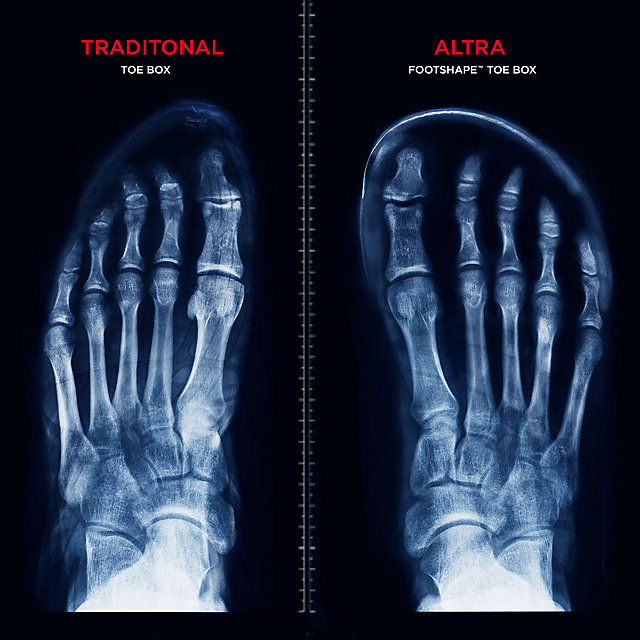
That is when I started running and all the theory presented in the book has stayed with me through all the good runs, all the shit ones, the injuries, the resting, the rehabilitation, the solo crunching and sharing the highs with friends. Moving the body can encompass so much discomfort and pain but there’s a place beyond the pain, beyond physical feeling. I suppose that feeling of transcendence is what we’re all chasing and maybe why you run, if you run. I started running in a ‘minimalist’ shoe, on recommendation of Pietro and another friend Yuri. The New Balance Minimus 10v1 is a minimal trail-runner. Not quite a barefoot shoe, but adapting some of the benefits of one; a thinner sole and better ground-feel, a wider toe box and a flexible sole and body (the shoe can be bent in half on itself). For me it was a way of putting into practice some of the theory in the book, by having increased ground-feel and ability to let my foot splay and move naturally. That is something that I came to love, and has stayed with me. I can’t see myself returning to shoes that do not provide these things. The world of minimal shoes is growing and I personally do my running, hiking, walking and day to day living in minimalist trainers like the Minimus mentioned above, in Altras (here) (for road and trail running and for hiking), sandals, barefoot and so on. I do have a pair of approach shoes for climbing and a heavier waterproof pair of shoes for winter as my extremities are prone to the cold, although I can’t quite shake the absence of toe-comfort and ground feel when wearing them. Minimal footwear strengthens the body, increases natural movement and strengthens the connective tissue. Above all of the physical benefits is a heightened awareness of one's body and of the Earth and a heightened relationship of one’s body being on the Earth.
I ran in the Minimus for the first year entirely. I had eight months in Australia and thanks to the book started running one, three, five, ten kilometers; peaking at about sixteen or so (ten miles) whilst also getting into hiking and rock climbing. Running in shoes with minimal support and increasing the mileage too soon, left me with recurring knee pain for at least a year and a half. Iliotibial Band Syndrome is one of two forms of repetitive strain injury affecting the knee of runners, athletes, walkers, hikers and so on. I would rest, heal, run and recur. Rest, heal, run and recur. Over about eighteen months. There were times when I couldn’t sit for more than an hour, couldn’t be in a car or a plane or a cinema without straightening my knees. I worried it might be something I would have to live with longterm. The IT Band injury spiked badly in February of 2020, when I was living on my own in Paris and running laps of Parc de Buttes-Chaumont one morning. Four laps and ten kilometers into my morning, something changed and I couldn’t take another step. After hobbling home, I understood for the first time in eighteen months, that complacency in the face of injury was not going to help me. It was time to take some care and some action. I went to see a doctor, and then another.

A few weeks later I found myself on my way to the airport at three o’clock in the morning. Denmark announced (in the face of the first Covid-19 wave that was ripping through Italy) the closing of its borders on the night of the thirteenth of March, for the following day, the fourteenth at midday. This left me with no choice but to pack my things into the suitcase that I had and get on the only remaining flight to Denmark to try to join Julie. We had recently married but were yet to be able to live together as I was waiting for my visa to the United Kingdom to be approved. Needless to say, the great fear of the unknown had begun all around the world and we wanted to face that situation as it unfolded, together. I had been living in Paris to be closer to her, while we worked out a long-term solution for where and how we could be together. We would take the train to one-another under the English Channel. Getting married was our way of fixing these dilemmas and sometimes timing just works in your favour, as we had married and applied for my visa less than two months before the world shutdown with Covid-19. It turns out as I am writing this, the last great thing we have done to date, was celebrating with friends, crying, laughing, feeling alive, feeling loved, it was our small wedding in Denmark, two months before I found myself in an Uber heading out at three in the morning. I would not turn up to my job in Paris four hours later like expected. It was the last time that I would see the friends I made there and the beautiful Parc de Buttes-Chaumont. I looked out of the car window as we drove out of the city in the darkness. A truly existential moment as life’s unpredictability lay over me. It would be the last French radio I would hear and as of the morning I would not be living in Paris anymore.
I stayed three months with Julie and her parents in Denmark, in the countryside. My visa was approved towards the end of that period, as people in the UK started to get back to work in some capacity. In the three months I was able to focus on basic rehabilitation exercises for my knee (as prescribed by the doctors I visited before leaving Paris) as well as developing mobility, strength and flexibility through daily yoga with Julie. There is a company based in Colorado (USA) called Xero Shoes (here), who make and sell minimalist footwear for walking, running and daily activities. They offer a DIY Huarache Sandal kit, to make your own pair of running sandals, combining a Vibram rubber sole, with a diverse array of wearing options through different lacing techniques. The sandal can be tied as the most lightweight, basic huarache, or in many more complicated techniques like the toga-style, for extra security for running. I bought their kit with the time on my hands to experiment and with the intention of strengthening and caring for my body through embracing the minimalist approach to footwear. Part of the philosophy behind my running rehabilitation was to be connected to the body and the ground beneath it. To strengthen the body by stripping away the comforts that headlined modern footwear and the comforts that my feet were so used to. This was my first time running in sandals and doing a proper barefoot run too, albeit short. It was a really good period. My huaraches have been there since, but Julie is there at the time of writing so she can bring them back for me in the next few weeks. Excited to get out again in them. They’re a true joy and the next best thing to wearing nothing at all.
 |
| - From the backyard in Denmark |


With visa approved, Julie and I returned to London in June 2020, after I had been away almost two years. That made it about two years since reading Born To Run. I was determined to learn from my experience with the recurring IT Band pain. I was determined to run again, and to run right.
Here goes a thank you to my friend, Anton. He suffered similar recurring difficulties with ‘runners knee’ whilst I had been away. We talked about physiotherapy, about barefoot running, about our experiences of the joys of running and the depression of injury. Sharing that pain and joy created a unifying determination to tip the scales away from pain and towards the joy of running, together. We ran every second day. Slowly and for short distances. We were adamant not to increase too quickly. The key was to run ‘pain free’. To focus on form, freedom, being present, talking. I have come to really enjoy and value having a running partner. Someone you can share the highs with, to push you when your mind is failing your body, someone just to distract you from the physicality and to enjoy the bliss of moving. Running with Anton became a formative part of my running life. We were building it up together, growing together and sharing in the joy of running injury free. It’s not been all painless, running never will be. Though the reward of sharing that sense of accomplishment with someone else has been really great. After nine months, he is still the most consistent person to message me for a run. He’ll run after a big night of drinking, to shake his hangover and get him up and out of the house. He has helped me with the consistency, commitment and enjoyment of regular running. Without a doubt running has been more joyous because of his company. We started by running two and a half kilometers. Not enough to cause any injury recurrence. We built to five, pain free. Six, seven, ten. Running ten kilometers together was something we had dreamed about on our first run, but not something we were sure was actually attainable. We had a serious high when we did our first ten kilometers together. Since then we have dipped in and out of one another’s routines, but as long as we are in the same place we’re pretty good at getting out together and that feels really good.

Running is a process and a journey, a truly individual experience. No two people’s experience of running will be the same, but being on the journey yourself is something that can be shared. The joys, the ambitions, the encouragement, the motivation, the accountability. It’s all part of the reward of sharing the experience with others. Anton and I differ in many ways, physically, in our lifestyles, and many other ways and from that there is always something to be gained from sharing something like running together. I believe running is a very human experience. You can trace a graph of growth, setbacks, overcoming challenges, peaks and troughs and the emotional highs and lows that comes with it. Anything that provides that feels, in itself, to be a ‘human’ experience because it parallels our experience of being alive. That graph looks much the same as life itself. When I say running makes me feel alive, it’s because it does. All of it. Every great victory and overwhelming sense of joy and pride and accomplishment and every painful step, every week of resting an injury, every hour of rehabilitation, of stretching, of lifestyle and dietary consideration. All of it teaches me to appreciate the peaks and troughs of life and makes me feel lucky, just to be living it. It’s pure luck to be here on the Earth at all and to be able to run. In a broader sense, it’s luck to be able to feel and experience anything at all. To make meaning of it all. To write about it.
Another person of great influence in my life as a runner is my friend Brian. At the time of writing he is double my age or thereabouts I am to be twenty-seven years old this year, and he, fifty-three. Brian was a customer of mine in my early years in London, I knew he liked coffee, his Brompton and music, but it was only last year that I started to catch on that he also runs. Not just enjoys running, but he flies. He smashes my pacing and doubles my distances and he’s double my age. What a great aspiration. To be fifty three and flying! Fate brought me (sadly enough) back to the same job I had the first time I lived in London but also brought me back to making coffee again for Brian. He pulled up one day on his bike, cargo shorts, a long sleeve jersey, a water bottle around his waist, a bandana tied around his head. If Brian had changed in two years, I do not know. It is certain that I changed a lot in that period while I was away. Some of the symbolism in how he presented himself made sense to me, as I had adopted similar symbolism in the way I dressed. I wanted to find out what was the key to running for years to come, to enjoying the journey of running, for the rest of my life. Brian was kind enough to say he could take me out for a run, talk a bit about form, his experiences, and get a coffee. Mentors come into your life generally out of nowhere. Although we’ve not spent a lot of time together outside of running, running with Brian has been absolutely formative to my experience of running in general. When I run with Brian, I can fly too. I smash my regular paces, I hold up, I keep up, I run for longer. Brian taught me that I am capable of more than I realised. He has totally broken my threshold of self-understanding and helped me to rebuild it, with a joy and a pride that surmounted just running pain-free.
 |
| - Flyin' Brian 2.0, after a run together on his fifty-third birthday. |
Anton and I had signed up in December for our first Half Marathon, what was at that stage a distant goal for 2021. Something to train for and to strive for together. A necessary goal in what had been a fundamentally unprogressive period. Six weeks after we signed up to the race and after having and recovering from Covid-19, Brian and I ran the distance together one morning. It didn’t consist of digging deep and finding some hidden reserve of energy and will-power. It came relatively comfortably. Pushing my longest run after the knee-rehabilitation from twelve-and-a-half kilometres to twenty-two-and-a-half kilometers and doing it four months before the intended date for running the half-marathon. I had created a goal and passed it at a time when I really needed it. That’s never to say that there won’t be injuries, setbacks, pain and progression to come, but it was the first major marker of progress in a time when life felt stagnant and paralysed. Brian is no longer a customer of mine. He is a friend and a mentor. He has taught me more than he knows.

 |
| - The mornin' of the twenty-two and half. Got to get up early to cross the river with the sunrise. |
The half marathon has been pushed back due to Covid-19, to September of this year. I am running it with Anton, and we signed up with our friend Blake and his two brothers. Running that distance with Anton is going to be a wonderful and joyous milestone for us both, and made more-so by the fact that we can share in that milestone together. It will be my first race. I won’t race it though, I will just run it together with my friends. Running has an ability to work on the ego. It cannot break down the ego, for its roots are too deep in the soil of our mind, but running can definitely help to loosen the grip of the ego. I feel my most open to people, my most receptive, my least competitive when I am running with other people. There is something levelling about these kinds of journeys. The key to enjoying it is to acknowledge it as a journey, part of a long, ever-changing, growing process and one that is unique to you. That ties you immediately to others around you. You’re sharing in that process, albeit it uniquely yours. I look forward to running hopefully for the rest of my life, sharing in the joys of being out there and moving with different people. Dear friends and new friends. Seeing new places and seeing where my legs can take me.
One lesson I have learnt is to remove the things that get you thinking about your run. Have conversations and run somewhere new. Letting the brain put its energy towards navigation, avoiding obstacles in your path, taking in lots of new information and having to process it and trying to hold an engaging conversation at the same time really takes the mind away from how you are feeling. It helps the brain to not think about form, about discomfort. Forget about the numbers, and keep your mind stimulated and occupied and the body will do it’s thing, after all, we are born to run. Tracking on your wrist or having your phone giving you audio updates, keeps you thinking about running, about the numbers. When I decided to put the tracking on before I set off, pocket my phone, forget about it. Be present. Run. Getting out is really the important thing. Finding the courage and effort and determination to do it. Be present if the run is painful, be present if it’s freeing. Some people seem to be able to find a silver-lining in the pandemic. That is the good-nature of human beings. To have a choice at which way the glass is looking, half empty or half-full. People have found themselves with time to learn new skills, or time to think and reflect on the important things in one’s life. We’ve all needed to find growth, progression and new forms of joy in a world that has become frightening and restricted. For me it has been running. More on this another time.
 |
| - Snow day running in February, 2021 |
 |
| - Some of my favourite shoes... just missing the huaraches. (NB Minimus 10v1, Vibram Five Finger Bilika, Altra Lone Peak 4.0) |

Great words in the right order!
ReplyDelete